


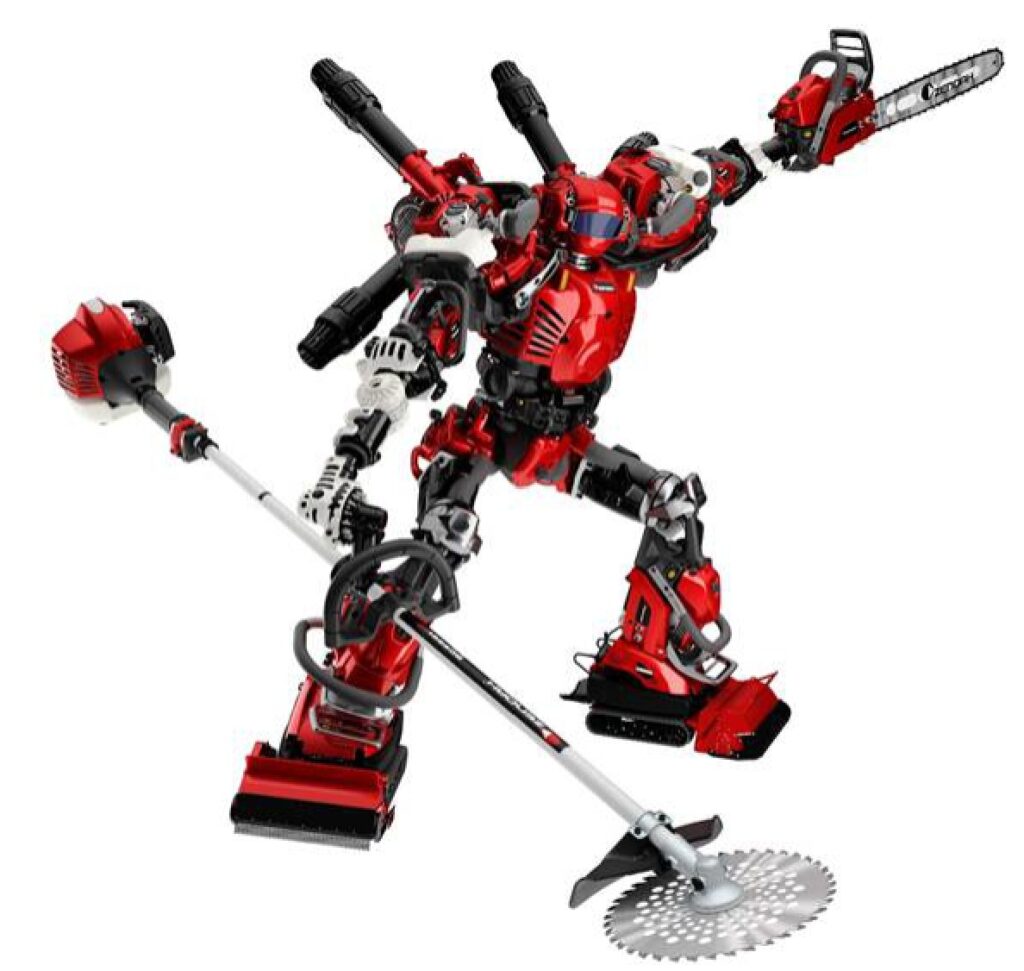
The Zeno Warrior. https://orionsk.co.id/index.html
Archives Intern Kimberley Hadford was doing research for our chainsaw exhibit when she came across this bad boy: The Zeno Warrior. Very few outdoor equipment brands even have a mascot, let alone one as cool as this! He’s essentially a giant robot with a weedwhacker on one arm, a chainsaw on another, and lawnmowers for feet. The image of him zooming down a perfectly mowed lawn, chopping down all fallen trees in his path has motivated her through hours of research.
Despite the Zeno Warrior’s modern appearance, his Zenoah brand actually dates back to 1910. They made a world record-setting plane and three-wheeled motorcycles before becoming Japan’s market leader in chainsaws. If you’d like to learn more about the Zenoah and the history of chainsaws in Japan, check out the full Curator’s Corner on our website. Be sure to keep an eye out for updates to our Chainsaw Exhibit next year.
Our Archives Intern, Kimberley Hadford, came across this heroic fellow while researching the history of chainsaws in Japan. Few outdoor equipment companies have mascots, let alone one as cool as Zenoah’s Zeno Warrior. According to their website, he vows to nurture the gifts of nature while keeping nature in check. He is a true warrior for peace—much like Zenoah itself. Their demonstrated ability to adapt from wartime business to peacetime lawncare is emblematic of Japan’s industrialization in the 20th century. That journey is uniquely Japanese. At the same time, their pivot into the chainsaw industry gives us a prime example of how modern chainsaws came to be.
Don’t let the Warrior’s modern appearance fool you: the Zenoah brand dates back more than a century. They began by making gas streetlamps in 1910 as Tokyo Gas Electric Company (Tokyo Gasu Denki or simply Tokyo Gasuden). They built gas engines on and off, focusing on low-power seven and nine cylinder radials and inverted inline fours. Their first major engine was the Jimpu engine in 1928. It was the first domestically developed and produced aircraft engine in Japan. The Jimpu proved itself in their Koukenki plane, which broke the world record for the longest circuit flight in 1938. It remains as Japan’s sole world record recognized by the World Air Sports Federation.
Tokyo Gas continued to make small passenger planes from 1928 until they were drawn into the Pacific War. The Imperial Japanese government placed Hitachi in control of Tokyo Gas’s engine division in 1939. Hitachi Aircraft’s first task was to build a knockoff of the successful German Bücker Bü 131 Jungmann training biplane. This replica did not stand up to the real Bü 131, but Hitachi Aircraft did win the bid to build licensed copies of their ally’s plane. Hitachi Aircraft then found a niche building training planes inspired by the Bü 131.
Many, if not most, training aircrafts were built by Hitachi Aircraft or featured their engines. For example, Hitachi Air built the Yokosuka K5Y Type 93 Intermediate Trainer (nicknamed the “Red Dragonfly,” Allied Code Name Willow) and took over production of the Tachikawa Ki-9 (Spruce) from 1944-5. Both were training aircrafts that were pushed into kamikaze attacks in the final years of the war. A Yokosuka K5Y was credited with performing the last recorded kamikaze attack, sinking the USS Callahan. Hitachi aircraft engines went into several other significant planes, like the Kyushu Q1W Tokai Navy Patrol Plane (Lorna), Japan’s first specialized anti-submarine aircraft. Due to Hitachi Aircraft’s contributions to the Japanese war effort, their factories were bombed by America’s Navy and XXI Bomber Command in 1945. Only the Tachikawa Hitachi Aircraft Substation remains in Tokyo today as a memorial promoting peace.
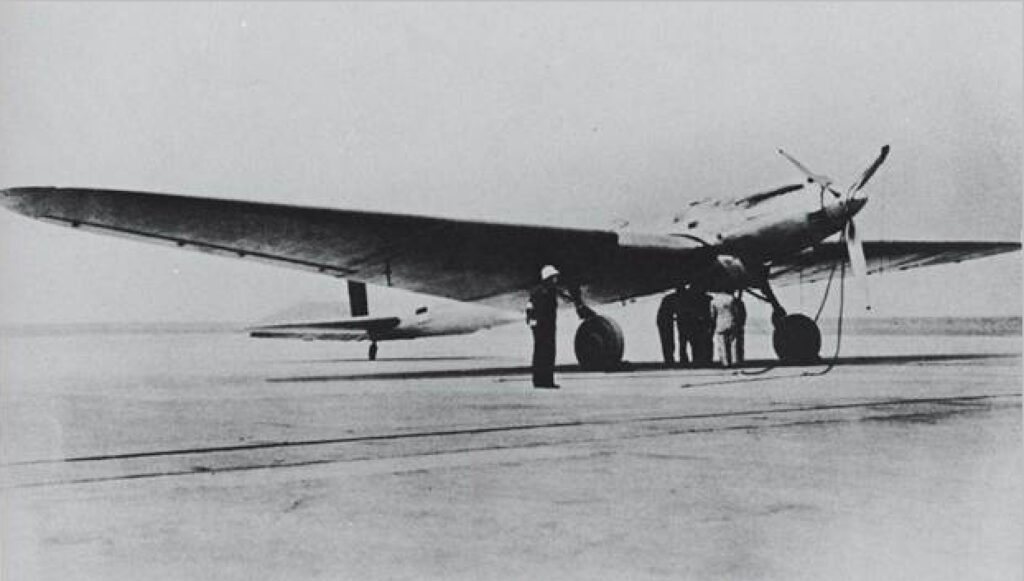
The Koukenki. https://en.wikipedia.org/wiki/Gasuden_Koken
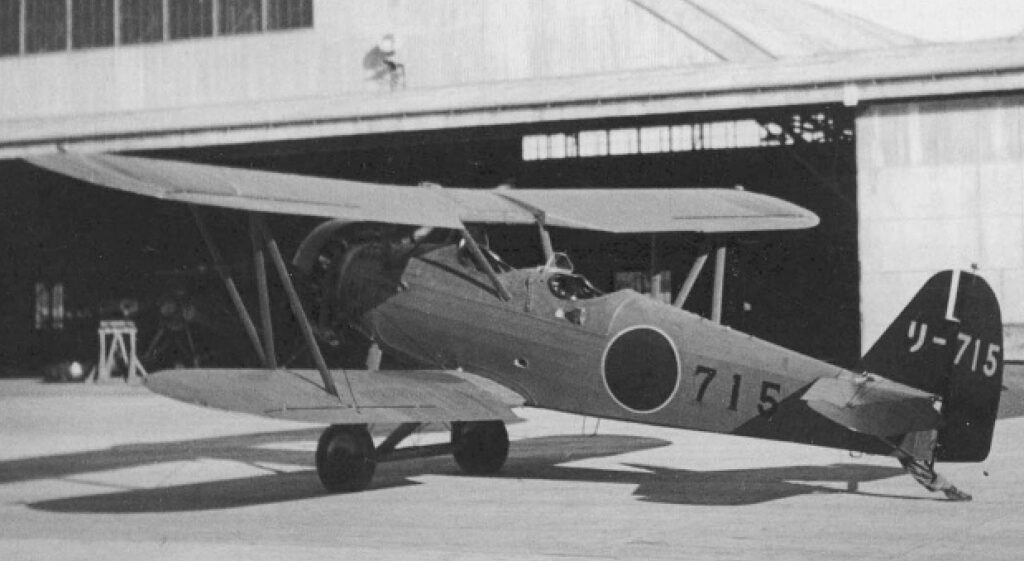
The Yokosuka K5Y (nicknamed the aka-tombo “Red Dragonfly,” Allied code name Willow). https://palmspringsairmuseum.org/yokosuka-k5y-warbird-wednesday-episode-230/
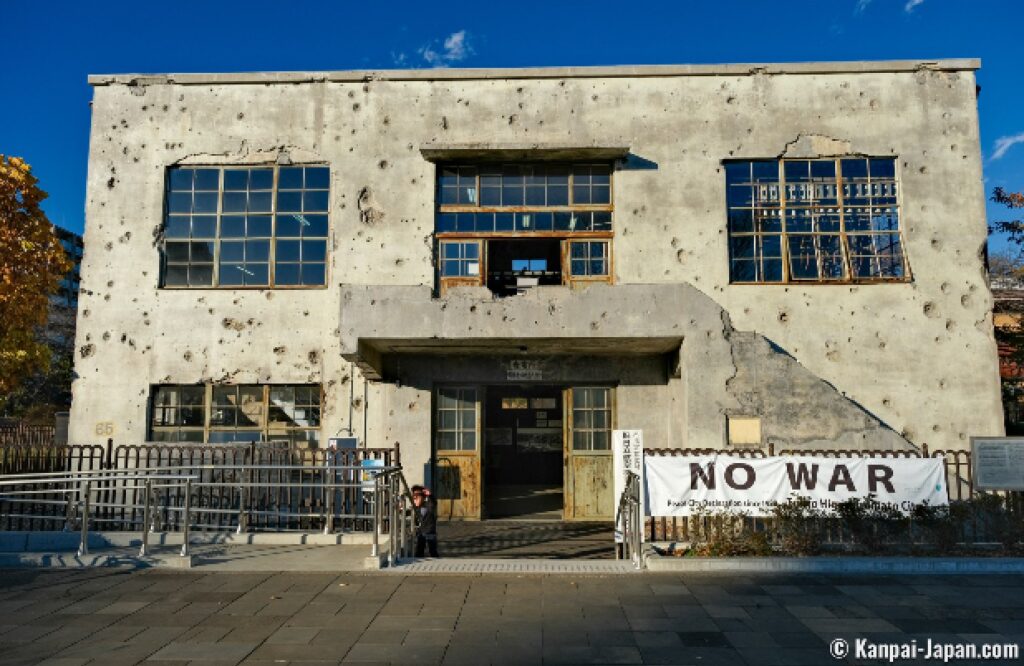
Tachikawa Hitachi Aircraft Substation Museum. https://www.kanpai-japan.com/hitachi-aircraft-tachikawa-former-factory
After the Japanese surrender, Tokyo Gas was forced to pivot. The occupying American government banned aircraft production and research. Hitachi Aircraft thus dismantled. Alone and with their factories destroyed, Tokyo Gas moved to new factory locations with little to do with their former engineering aims. They sold roof shingles and other products as they waited for other opportunities to present themselves.
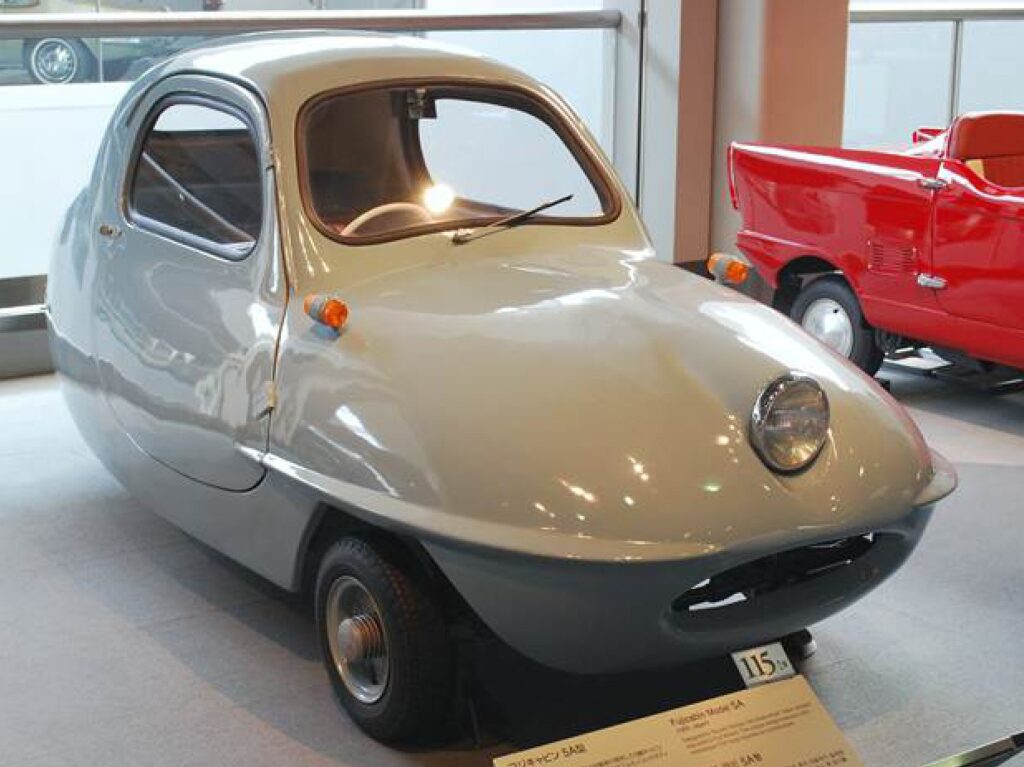
The Fuji Motor Cabin 5A. https://en.wikipedia.org/wiki/Fuji_Cabin
That opportunity came through a change in American policy. In 1947, the Americans decided that strengthening Japan as a Cold War ally would be more useful than punishing them as an enemy. Japanese businesses began to re-consolidate and innovate again. Tokyo Gas became Fuji Motor Company. Fuji Motor performed maintenance on American military vehicles and once again manufactured engines. Their two-stroke engines went into motorcycles made by companies like Miyata. Their own vehicles (including three-wheeled oddity, the Fuji Motor Cabin) were less successful. In a bind, they finally found some success selling a consumer brushcutter. Fuji Motor then sought to capitalize in the expanding Japanese market for outdoor equipment.
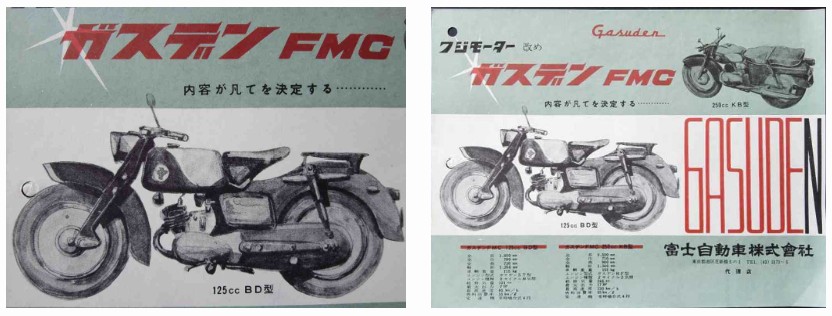
Gasuden motorcycle ca. 1952. https://www.oldjapanesebikes.com/other_jdm_machines/page-28
This pivot makes sense in the history of chainsaw manufacturing. Motorcycle engines had long been used in chainsaws for their small size and high power. For example, Andreas Stihl utilised a DKW motorcycle engine back in 1929 for his first gas-powered chainsaw, the two-man Model A. Danarm used Villiers engines in their chainsaws, which were used by the British Army in WWII. There was money to be made in chainsaws for motorcycle engine manufacturers. It was even more lucrative if you built your own small engines, like McCulloch. Since Fuji Motor made their own motorcycle engines, they were now uniquely poised to enter the chainsaw market.
Realizing the potential applications for their technology, Fuji Motor merged with Komatsu in 1972 to create small engine devices. They named their division ‘Zenoah.’ The name uses the Japanese character ‘ze,’ meaning ‘challenge the future.’ It symbolizes their drive to leave the past behind them and blaze a new trail. Komatsu-Zenoah made their first chainsaw in 1975: the G35AV. The G35AV’s success became the foundation of the company’s future.
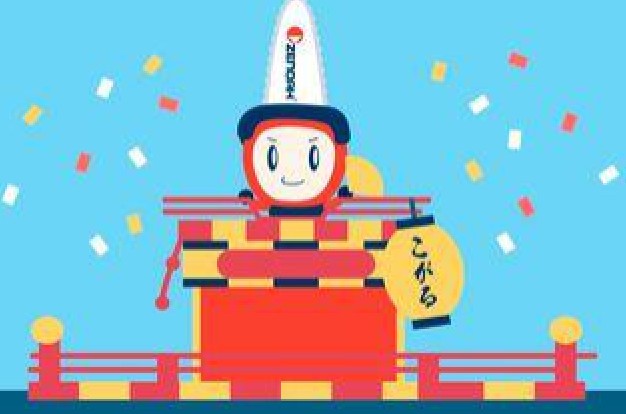
Kogaru-kun mascot. https://www.zenoah.com/jp/about/kogaru-kun/
Zenoah made four more successful chainsaws after the G35AV, including the G300 in 1985, nicknamed “Kogaru-kun” (“Lighthearted Little Guy”). The li’l guy was ideal for use by women and older folks at home because it only weighed 6 ½ pounds. Use by all types of consumers was important in the Japanese market because of their susceptibility to earthquakes and hurricanes. Chainsaws are useful to allow citizens to buck and clear fallen trees. Kogaru-kun’s weight was also a hit with loggers in areas without big timber, including Asia and Europe. Zenoah’s consecutive successes led them to be Japan’s market leader in chainsaws by 2007. The future was now theirs.
Selected Bibliography
Craven, Wesley, and James Lea Cate, eds. The Army Air Forces in World War II, Volume Five, the Pacific: Matterhorn to Nagasaki June 1944 to August 1945. Chicago: University of Chicago Press, 1953.
Husqvarna. “Acquisition of Komatsu-Zenoah’s outdoor-products operation now finalized.” Accessed August 12, 2026. https://www.husqvarnagroup.com/en/press/acquisition-komatsu-zenoahs-outdoor-products-operation-now-finalized-1066082
Lee, David, and Mike Acres. Chainsaws: A History.
Mikesh, Robert, and Shorzoe Abe. Japanese Aircraft, 1910–1941.
Smithsonian National Air and Space Museum. “Hitachi Amakaze 31 (Ha-23-31) Imperial Japanese Navy Radial 9 Engine.” Accessed August 12, 2026. https://airandspace.si.edu/collection-objects/hitachi-amakaze-31-ha-23-31-imperial-japanese-navy-radial-9-engine/nasm_A19670090000
Zenoah. “CA ゼノアの歴史 (長編) : Zenoah history (Long Ver.).” YouTube video.

