


Money talks—even for those who were denied a voice. To win back the vote for Asian British Columbians, Kapoor Singh Siddoo and Mayo Singh Manhas had to fight their way to the top of the Canadian sawmill industry in the first half of the 20th century. Success bought them a voice. With that voice, they were able to galvanize and capitalize on the momentum built by those below them. The lumber barons initially worked behind the scenes to fund and organize activism. By 1947, they would be at the tip of the spear, ending 40 years of unjust disenfranchisement. They led the delegations that regained the provincial and municipal vote for South Asian Canadians. Their centrality in this historic feat again shows the transformative influence of Kapoor, Mayo, and the lumber industry on BC’s history.
Making money and fighting for freedom were equal goals for Kapoor ever since he decided to set off for North America. Life in British India’s Punjab region had been trying for Kapoor and his family. He lost his mother to the bubonic plague and his father to pulmonary tuberculosis before he even started school. Epidemics like these were a fact of life in the Punjab from the late 19th century to the early 20th century. 3.5 million people died of the plague alone in that province between 1896 and 1930. These epidemics painfully highlighted the effects of British colonization as their administration dealt with them in harsh and confusing ways. Mothers were dragged from houses to be vaccinated and quarantined with little explanation to their families. The Punjab was a staging ground for both the British army and their traders, spreading foreign diseases across the region. Intensified British administration in this era strengthened the people’s desire to be free. Reflecting this, a nationalist teacher told Kapoor when he was just ten years old:
“Boys, if you ever get the chance, go to America and make lots of money, then come back and free India.”
Kapoor immediately began studying English until he was fluent. His father-in-law, before succumbing to the plague himself, paid for Kapoor to earn a degree in bookkeeping. Kapoor was the sole member of his family to attend school and one of few in his community to speak English. He answered the call of his family and his teacher to become a leader working to free his people, acting as translator and bookkeeper for his fellow immigrants in California. Saving what money his fellow workers paid him; he began investing and working for Teja Singh’s “Guru Nanak Mining and Trust Company” in Victoria by 1912. Teja’s firm invested in local businesses that hired South Asian immigrants. With the money he made, he purchased a dairy business, real estate, and funded the work of activist and journalist, Kartar Singh Hundal. It was meaningful work that supported Kapoor’s dreams of helping his community.
Mayo similarly stepped up to empower his family and community. He initially came to America to follow his older brother, Ganea. It made good financial sense: a labourer in Canada could make seven rupees per day. In British India, an army Sepoy made only nine rupees per month. Mayo knew that that kind of wealth could elevate his whole community.
Grasping at those opportunities would require entering the politically charged world that South Asian immigrants inhabited at the turn of the 20th century. Mayo had arrived in San Francisco in 1906. In 1907, anti-Asian race riots across the Pacific coast were legitimized by the Canadian government’s discriminatory amendments to the Immigration Act. South Asians now had to arrive in Canada via a “continuous journey” from their country of origin. Since Mayo was already in America, he had to enter BC secretly to be reunited with Ganea. This set the tone for Mayo’s early efforts to support his family: though avoiding activism himself, politics surrounded him.
Mayo’s political environment is exemplified in Husain Rahim, a fearless South Asian activist whose business advice jumpstarted Mayo’s career. Rahim’s imprint on Mayo is indelible. It was he who advised Mayo to expand his mill operation to Vancouver Island, noting a huge opportunity to buy the Canadian Pacific Railway’s timber rights alongside their newest rail line. It was also Rahim that convinced Mayo to bring Kapoor in as a partner in this new enterprise in 1917. Mayo always had a knack for shrewd decision-making: it was how he had organized his coworkers across racial lines to purchase and successfully run the mill they worked at. But bookkeeping was another skill entirely. Kapoor would eventually become Mayo’s sole partner, highlighting the astuteness of Rahim’s advice.
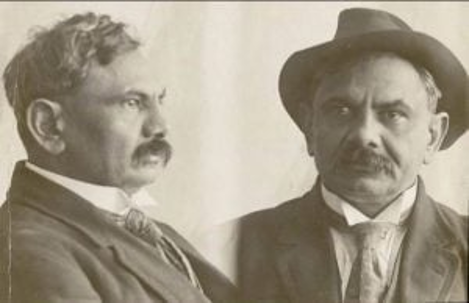
Despite Rahim’s impact on Mayo and Kapoor, he is mainly remembered as an activist. He co-founded the Canada-India Supply Trust in 1910, which sold real estate to South Asian immigrants that were shut out of buying homes otherwise. His influence bought allies, who supported him through successful court cases against the government of BC. In 1912, five years after BC had stripped South Asians of the vote, Rahim became the first recorded Muslim in Canada to cast a ballot. He even acted as a scrutineer in that election. Furious, notorious spymaster and immigration officer William Charles Hopkinson arrested and imprisoned Rahim. Rahim hired lawyers to support him and won his freedom, just as he had years before to fight his deportation. His proximity to Mayo and Kapoor, coupled with the example he set as a businessman who fought non-violently, illustrates the political climate they shared in Canada.
The greatest influence on Kapoor’s decidedly non-violent politics was his early ally, Teja Singh. Teja was a fellow Punjabi Sikh who earned his Master of Arts in 1911 from Harvard. Upon his graduation, he joined his friends in BC and organized a delegation to protest discriminatory immigration policies. He was accompanied by Sundar Singh, a Glasgow-educated doctor, and missionary Louis W. Hall. They petitioned federal and provincial governments to allow the wives and children of South Asian immigrants to join them in Canada. It was an issue close to the hearts of men like Kapoor, who had left his wife, Besant Kaur, back in India. The multireligious delegation failed to sway the powers of the time, but it provided a model for Kapoor’s political approach.
He and Kartar swore to achieve their goals through persuasion, not threats. The office of their moderate Punjabi newspaper, the Sansar, was burned down by radical Gadar (Mutiny) Party members in 1914. Nevertheless, they refused to resort to violence and resolved to work within the Canadian system. They cut their beards and ceased wearing their turbans to convince Canadians that South Asians could assimilate to our culture. Kapoor gave speeches about South Asian culture at the Theosophist Society, winning powerful Anglo-Canadian allies. Group of Seven painter Lawren Harris, and Albert Stafford Smythe, father of Maple Leafs founder Conn Smythe, became Theosophist friends of theirs. Kapoor’s allies also supported him in leading the BC United India Home Rule League and other successive groups that peacefully advocated for India’s freedom.
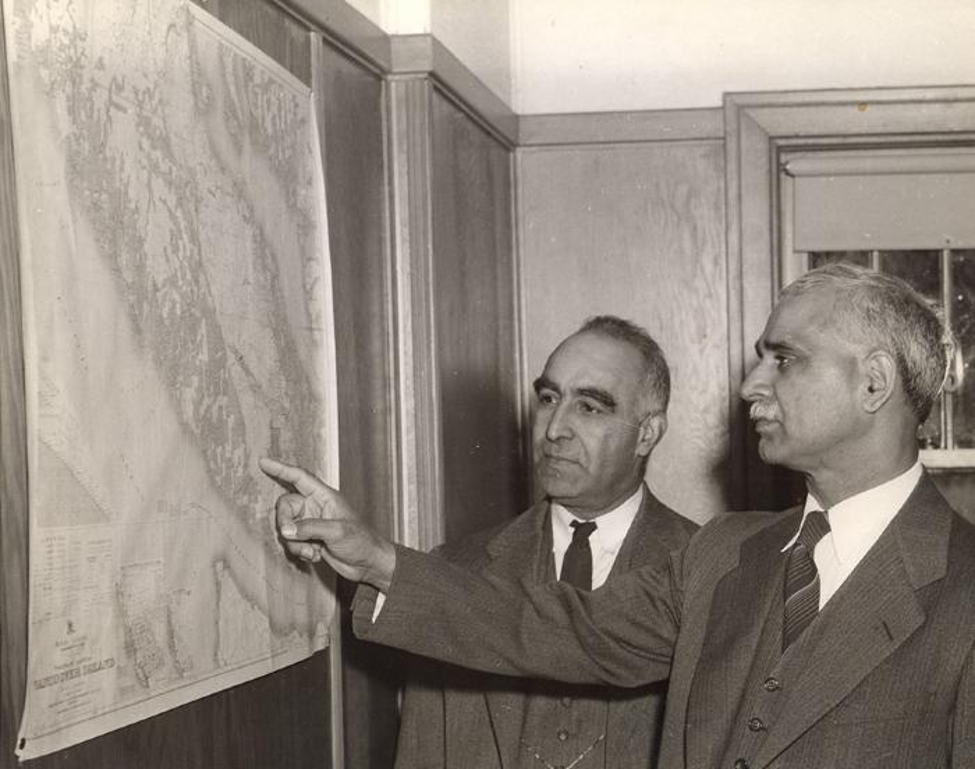
Mayo officially joined Kapoor in politics in 1938 to protect his workforce from the threat of deportation. Like Mayo himself, many South Asian immigrants had technically entered the country illegally. There were now restrictions limiting the number of South Asians that could enter Canada each year. Legal South Asian immigrants could bring their immediate family members, but many brought their extended families or friends. They did not consider doing so to be breaking the law, especially since the laws were designed to unfairly discriminate against them. Mayo himself even sponsored his worker’s family when he brought his wife over from India. The mayor of Duncan and other dignitaries had personally written letters in support of these immigrants, noting Mayo’s contributions to the area. Supporting immigrants was how Mayo and Kapoor built not just a strong economy on Vancouver Island, but a strong Indo Canadian community.
Kapoor and Mayo began their defence by hiring David Hogg to represent their workers. The lawyer accompanied them to Ottawa where they earned a meeting with Frederick Blair, Director of the Immigration Branch of the Department of Mines and Resources. Blair promised to help but dragged his feet on their case.
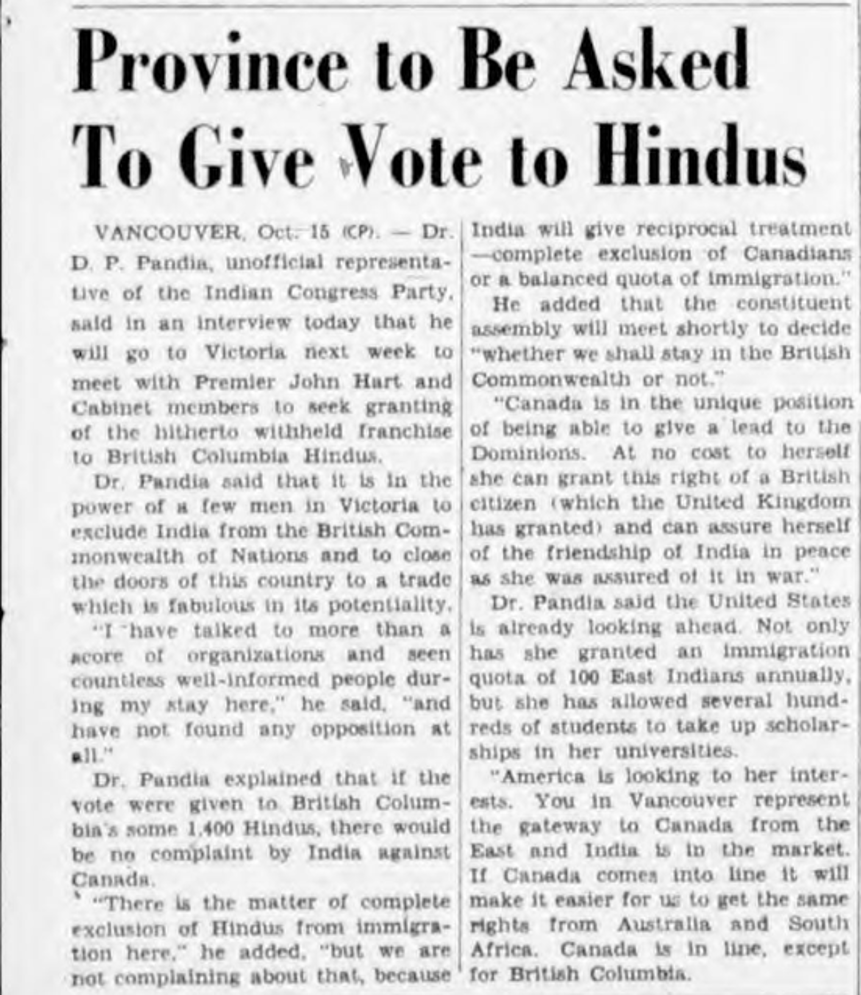
To get real results, Kapoor called on a Hindu lawyer he met through the Theosophist Society: Dr. Durai Pal Pandia. Pandia was on a lecture tour of North America when he met Ishar Singh Banns, a friend of Kapoor’s. Banns asked him to help the Sikh workers of Duncan. After meeting with Mayo and Kapoor on the Island, the lumber barons paid around $7,000 to finance a delegation to Ottawa. From their suites at the Chateau Laurier, Pandia led Banns, Naina Singh Kondola, and Battan Singh Dhoot in a negotiation with Prime Minister William Lyon Mackenzie King. They secured amnesty and legal status for roughly 218 Sikhs living in BC in July of 1939. Most of these new registrants originated from less than 15km away from Mayo and Kapoor’s neighbouring hometowns in the Punjab. This victory for their community was made possible through the wealth and connections Mayo and Kapoor built through BC’s lumber industry.
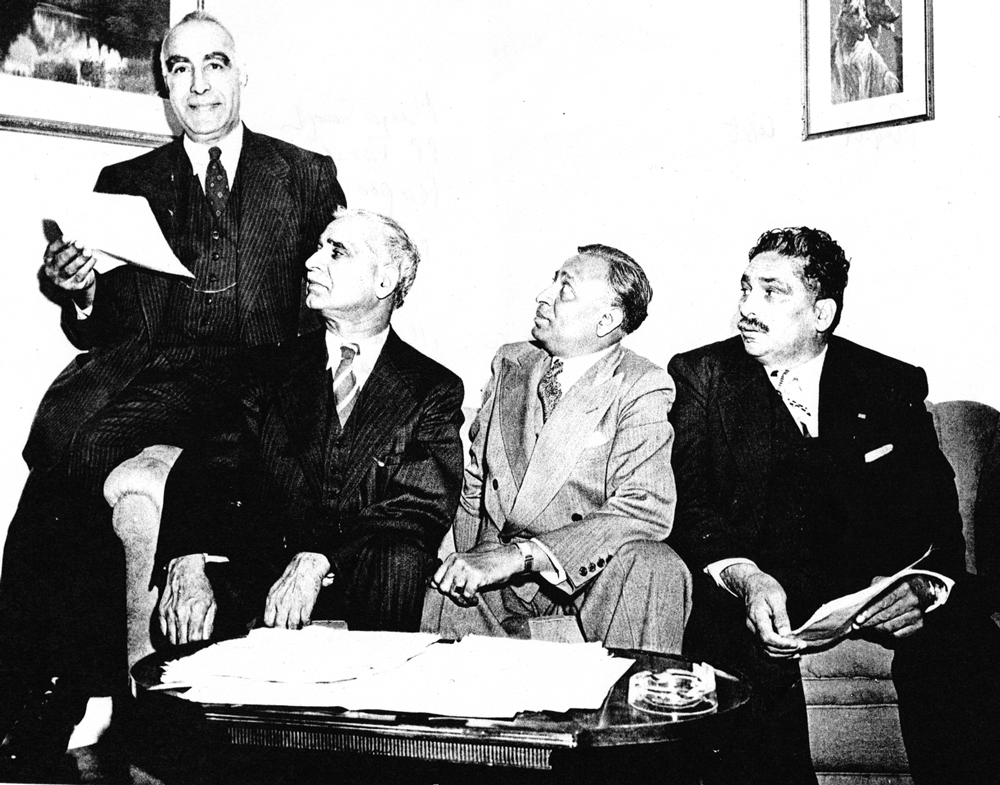
Pandia’s victory invigorated Mayo and Kapoor’s struggle for justice. Especially after they watched the internment of their Japanese neighbours in 1941, the South Asian community set their sights on gaining full citizenship rights. The notion that the first Indo Canadian children could be deported from the land of their birth was unsettling to the community. Japanese Canadians had warned as much before they lost everything. By gaining the vote, they could argue for their fair treatment as taxpayers and fellow British subjects.
Through the 1940s, Kapoor and his allies funded and arranged for several activists associated with Gandhi to argue for the vote. For example, Kapoor, Mayo, and Kartar Singh brought speaker Henry Polak to Canada to speak. Polak articled under Gandhi’s supervision before joining his law firm. With Polak’s help, they were able to meet with Mackenzie King once more. They failed to move the Prime Minister. The 1943 Khalsa Divan Society delegation (described in Part I) similarly failed to persuade the wartime government despite the South Asian community contributing half a million dollars in war bonds to support that venture. Unfortunately, the Premier said that he would not consider such a sweeping change while so many voters were at war. Mayo, Kapoor, and their peers elected to cool their heels until peacetime.
Finally, their moment came in 1946 when BC was holding public hearings concerning changes to its Elections Act. Consistent pushing by the Canadian Commonwealth Federation in BC had kept the question on the table throughout the war effort. Mayo and Kapoor saw their chance. They joined with Kartar, Eishar Singh, and Naginder Singh to bring Pandia back to represent them once more. The businessmen were in attendance as Pandia presented their case. 12 organizations also spoke in support of granting the franchise to Asians with only one speaking against. With near unanimity, the all-party committee of the BC legislature recommended that the vote be granted to Indian, Japanese, and Chinese Canadians in BC. At last, they had been heard.
Bill 84 passed on April 7, 1947, granting the vote to South Asian and Chinese Canadians. Japanese Canadians were granted the federal right to vote in 1948 and were allowed to return to BC a week later. In March of 1949, Japanese British Columbians won the franchise as well. Mayo and Kapoor’s support for regaining the vote for South Asians had built critical momentum for the entire Asian rights movement.
Their work was not yet complete: South Asians still could not vote at the municipal level. On September 17, 1947, Mayo, Kapoor, Naranjan “Giani” S. Grewall, and Pandia decided to try to speak at the Harrison Hot Springs conference of municipalities. Grewal, like Mayo and Kapoor, owned six sawmills in Mission City. They were turned away by the organizers, who insisted that the meeting was for aldermen and mayors only. This roadblock could have dissuaded the delegation. But Pandia, a Hindu, reportedly scoffed, saying “oh no, Sikhs don’t give up. This is the time to fight when you are against all odds.” Herb Doman would later reflect this same sentiment, declaring that “a Sikh never gives up. If you have a vision, you keep going.”
Mayo and Kapoor knew the mayors of Victoria and Duncan personally, so they invited them to their hotel to chat. They encouraged them to bring any other politicians who wanted to join. In accordance with their Sikh faith, Mayo and Kapoor did not drink. But they bought a case of scotch and Kapoor handed it to Pandia, telling him, “Your job is to offer anyone who comes in a drink.” The drinks and conversation were flowing between the politicians and their local business leaders. After spending time with the delegation, the leaders agreed to let them speak at the conference. Pandia asserted to them that South Asian Canadians:
“Were taxpayers and property owners and that it was a fundamental principle of democracy that no taxation without representation…Indians had been pioneers in the economic development of Canada, particularly in the lumber industry and agriculture. They were loyal people who had given half a million dollars towards the Sixth Victory Bond Issue and contributed generously to the Red Cross and hospitals.”
Pandia was referencing Mayo’s philanthropy. For example, Sister Superior of St. Joseph’s Hospital in Comox recalled that he regularly donated new linens to them, once furnishing a whole new wing. He later read in the paper that Sister Mary Peters was celebrating 30 years as a nursing sister and her golden anniversary as a sister. Mayo donated two bedspreads for each year of her sisterhood, totalling 100 fresh linens for the hospital. He also raised $89 (almost $2000 today) in Paldi for the Red Cross and steadily donated linens to the BC Protestant Orphanage. Mayo’s philanthropy was indiscriminate and far-reaching. His example firmly stood against the notion that South Asians did not valuably contribute to Canadian society.
Pandia emphasized their contributions by directly drawing attention to Mayo and Kapoor. Karm S. Manak recalled that Pandia pointed at the lumber barons and said that:
“These two men had hundreds of employees working for them. Their workers were allowed to vote, and these two mill owners could not vote because they were East Indians.”
The strong arguments made by their delegation swayed the conference. The Harrison Hot Springs Conference passed a resolution on October 16, 1947. It granted the municipal right to vote to all South Asian Canadians in BC, except for Vancouver. Mayo, Kapoor, Pandia, Kartar, and Eishar Singh rectified this by speaking in the Vancouver City Council on October 23, 1947. They won the municipal vote that day for South Asian Vancouverites. At last, 40 years of disenfranchisement had ended. South Asians could once again vote anywhere in Canada and hold public office.
Harrison Hot Springs ally Naranjan “Giani” S. Grewall became the first South Asian to hold public office in Canada when he became mayor of Mission City in 1950. For Kapoor’s part, he achieved his dream of serving India. Though India gained independence in 1947, he still sought to free India from the afflictions that had taken his family members. He built a hospital in his wife’s hometown that would be called the “Kapoor Singh Canadian Hospital.” The hospital was run by his two daughters, Jagdis (Jackie) and Sarjit, who became doctors specifically to return to India. In both Canada and India, freedom and democracy tasted sweet.
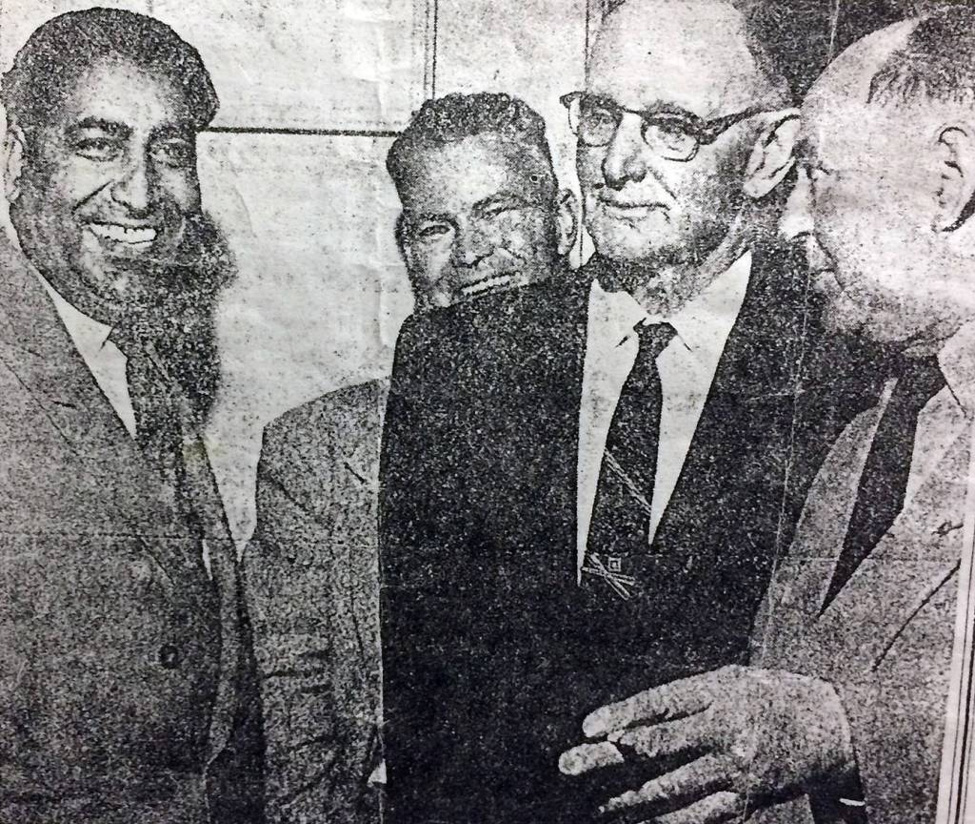
Through this narrative of incremental progress towards regaining the vote for South Asian Canadians, we see Mayo and Kapoor at nearly every step of the way. They were the first to hire lawyers to defend their workers, galvanizing resistance to oppression in the labour movement. Kapoor and Mayo brought Pandia to BC and accompanied him to win legal status for their workers and argue for the vote to the Prime Minister, BC legislature, Harrison Hot Springs Conference, and Vancouver City Council. These lumber barons, and thus the industry that fuelled them, were present at every major victory for South Asian enfranchisement in BC. Even the first South Asian to hold public office in Canada was Grewall, a British Columbian sawmill owner. The influence wielded by these men was rooted in the forests of BC, again showing the influence of the lumber industry on BC’s history. Mayo and Kapoor grew from the soil of the Cowichan Valley to change the face of Canadian society forever.
Kimberley Hadford
Selected Bibliography
Arnold, David. Colonizing the Body: State Medicine and Epidemic Disease in Nineteenth Century India. New Delhi: Oxford University Press, 1993
Bains, Satwinder Kaur, and Balbir Gurm, eds. A Social History of South Asians in British Columbia. Abbotsford, BC: The South Asian Studies Institute, University of the Fraser Valley, 2022.
Johnston, Hugh J.M. Jewels of the Qila: The Remarkable Story of an Indo Canadian Family. Vancouver, B.C.: UBC Press, 2011.
Mayo, Joan. Paldi Remembered: 50 Years in the life of a Vancouver Island logging town. Duncan, B.C. : Paldi History Committee, 2004.
Mission Museum. “Shaping our community: Prominent Indo-Canadian Pioneers” https://missionmuseum.com/local-history/shaping-our-community-prominent-indo-canadian-pioneers/ Accessed August 25, 2026.

